
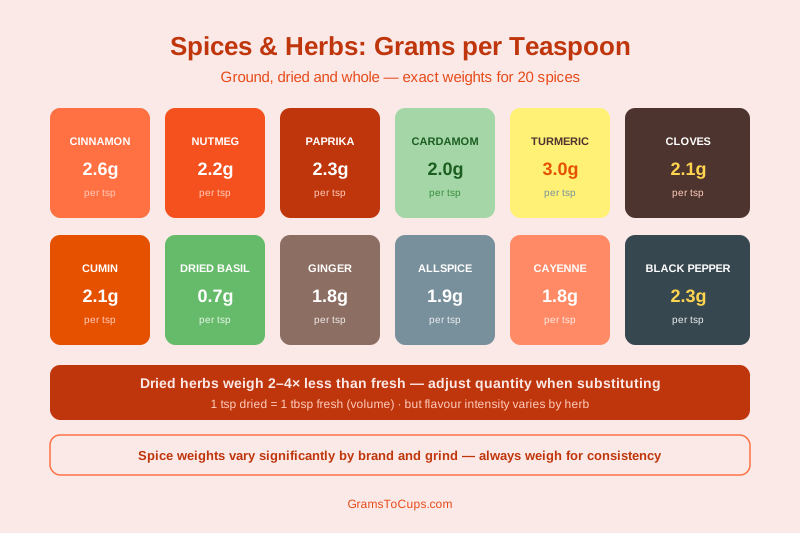
Spices and herbs are measured in such small quantities that the difference between a teaspoon measured loosely and one that's firmly packed can meaningfully change the flavour of a dish. More importantly, when you're scaling recipes up or down, or substituting between dried and fresh herbs, knowing the actual gram weight allows you to be precise. This guide gives you gram weights for 20 common spices and herbs, and explains the fresh-to-dried substitution ratio.
Why Spice Weights Vary So Much
Different spices and herbs have dramatically different densities. Dense, finely ground powders like turmeric (3g/tsp) pack tightly; light, flaky dried herbs like basil (0.7g/tsp) are mostly air. This 4× difference means that using the same number of teaspoons of different spices delivers very different amounts by weight — and flavour intensity doesn't scale linearly with volume.
Complete Spice & Herb Weight Chart
| Spice / Herb | 1 Tsp (g) | 1 Tbsp (g) | Notes |
|---|---|---|---|
| Cinnamon (ground) | 2.6g | 7.8g | One of the most commonly used baking spices |
| Nutmeg (ground) | 2.2g | 6.6g | Very strong flavour — use sparingly |
| Allspice (ground) | 1.9g | 5.7g | Tastes like cinnamon + cloves + nutmeg |
| Cloves (ground) | 2.1g | 6.3g | Extremely potent — use ¼ the amount of cinnamon |
| Ginger (ground) | 1.8g | 5.4g | Common in gingerbread, carrot cake |
| Cardamom (ground) | 2.0g | 6g | Key in Scandinavian baking |
| Turmeric (ground) | 3.0g | 9g | Dense; strong colour |
| Paprika (ground) | 2.3g | 6.9g | Sweet or smoked |
| Cumin (ground) | 2.1g | 6.3g | Savoury applications primarily |
| Coriander (ground) | 1.8g | 5.4g | Pairs with cumin in most spice blends |
| Cayenne pepper | 1.8g | 5.4g | Use sparingly — very hot |
| Black pepper (ground) | 2.3g | 6.9g | Universal seasoning |
| Dried basil | 0.7g | 2.1g | Very light — mostly air |
| Dried oregano | 1.0g | 3g | Mediterranean dishes |
| Dried thyme | 0.8g | 2.4g | Woody, pairs with rosemary |
| Dried rosemary | 1.2g | 3.6g | Crumble before measuring |
| Dried parsley | 0.5g | 1.5g | Very light, mild flavour when dried |
| Garlic powder | 2.8g | 8.4g | Dense powder |
| Onion powder | 2.4g | 7.2g | Common in spice blends |
| Mixed spice / pumpkin spice | 2.3g | 6.9g | Blend of cinnamon, ginger, allspice etc. |
Fresh Herbs vs Dried: Substitution Ratios
Dried herbs are significantly more concentrated than fresh — the dehydration process removes water and concentrates the essential oils that carry flavour. The standard conversion is:
- 1 tablespoon fresh herb = 1 teaspoon dried herb (reduce dried to ⅓ the fresh volume)
- Or by weight: 1g dried herb ≈ 3–4g fresh herb
This rule applies to most leafy herbs: basil, parsley, oregano, thyme, rosemary, mint, tarragon and sage. It does not apply well to herbs like chives (too delicate to dry well) or coriander leaf / cilantro (loses most flavour when dried — use fresh only or substitute coriander seeds).
Spices in Baking: The Key Ones and Their Proportions
The classic baking spice blend used in gingerbread, spice cake and carrot cake follows a standard ratio per cup of flour:
- Cinnamon: 1½ tsp (3.9g) — the dominant note
- Ginger: 1 tsp (1.8g) — warmth and heat
- Allspice: ½ tsp (0.95g) — complexity
- Nutmeg: ¼ tsp (0.55g) — background warmth
- Cloves: ⅛ tsp (0.26g) — depth (use sparingly)
This is why "pumpkin spice" is mostly cinnamon — a 1:1 substitution of cloves for cinnamon would produce an inedible result. Always use the tablespoon to grams guide when scaling spice blends up for large batches.
Frequently Asked Questions
How many grams is 1 teaspoon of cinnamon?
One teaspoon of ground cinnamon weighs approximately 2.6 grams. A tablespoon of cinnamon weighs approximately 7.8g. Cinnamon is moderately dense compared to other spices — heavier than dried basil (0.7g/tsp) but lighter than turmeric (3g/tsp). For scaling large-batch spice blends, always weigh your cinnamon rather than measuring spoons.
How much dried herb equals 1 tablespoon of fresh?
Use 1 teaspoon of dried herb to replace 1 tablespoon of fresh herb. This is the standard 3:1 fresh-to-dried volume ratio, based on the fact that drying removes water and concentrates flavour. By weight, it's closer to 3–4:1 (fresh herbs contain 80–90% water). For delicate fresh herbs like fresh basil, you may find that double the amount of dried still doesn't capture the same brightness — in these cases, use fresh if at all possible.
Why do spices lose flavour over time?
Spice flavour comes from volatile aromatic compounds (essential oils) that slowly evaporate over time when exposed to air, heat and light. Ground spices have a much larger surface area than whole spices, so they lose flavour faster — typically within 6–12 months of opening. Whole spices (cinnamon sticks, cardamom pods, whole cloves) retain flavour for 2–4 years. Store spices in airtight containers away from heat and light, and buy in small quantities. A quick smell test reveals freshness — if it doesn't smell strongly of the spice, it won't taste of it either.
Can I weigh spices on a regular kitchen scale?
Most kitchen scales have a minimum resolution of 1–2g, making them unsuitable for weighing single teaspoons of spices (which are 0.7–3g). For spice-level precision, use a jewellery scale or precision scale with 0.1g resolution. Alternatively, measure multiple teaspoons and divide: weigh 5 teaspoons of cinnamon (approximately 13g) and use one-fifth. For everyday cooking, measuring spoon accuracy is sufficient — the 0.3g difference between a slightly generous and slightly sparse teaspoon of cinnamon will not ruin a cake.
What's the difference between sweet paprika and smoked paprika?
Both are ground dried red peppers, but with very different flavours. Sweet paprika has a mild, slightly fruity pepper flavour with no heat. Smoked paprika (pimentón de la Vera) is made from peppers that are slowly dried over oak wood fires, giving it a deep, smoky flavour. They weigh identically (approximately 2.3g per teaspoon) but are not interchangeable in flavour. Smoked paprika transforms a dish; sweet paprika adds colour and mild flavour.
How do I store spices to keep them fresh longest?
Store spices in: (1) airtight glass or metal containers (not clear glass on a light-exposed rack); (2) away from the stove — heat degrades flavour; (3) away from the sink — humidity causes caking; (4) in a cool, dark cupboard. The refrigerator is unnecessary and can cause condensation. Label containers with the purchase date. Replace ground spices every 6–12 months; whole spices every 2–3 years. Buying from bulk stores in small quantities ensures maximum freshness.