
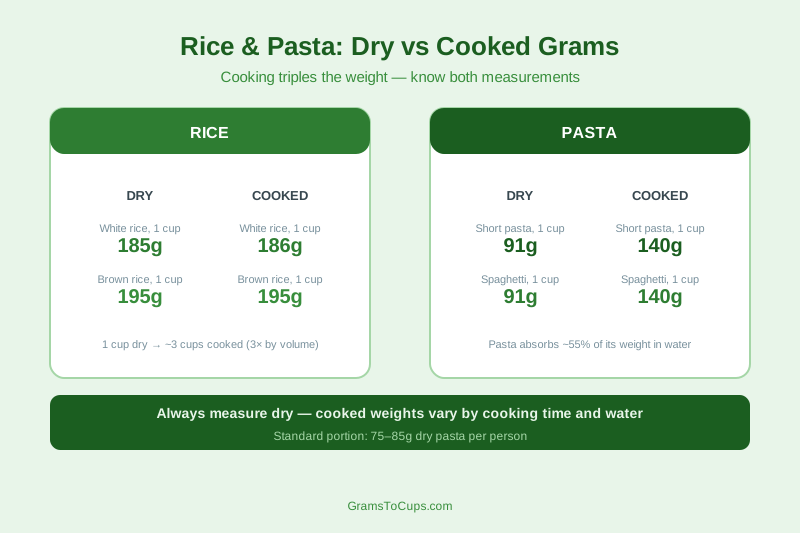
Rice and pasta measurements create constant confusion because recipes can list quantities as either dry (uncooked) or cooked — and the relationship between the two is not obvious. One cup of dry rice becomes three cups of cooked rice. One portion of dry pasta weighs around 75–85g but expands to nearly double its weight when cooked. Getting these conversions right means you'll cook the right amount every time and hit nutrition targets accurately when tracking food intake.
Understanding Why Rice and Pasta Expand When Cooked
Both rice and pasta absorb water during cooking. Starch granules inside the grains and pasta absorb water, swell and gelatinise — this is what makes cooked rice and pasta soft and edible. Rice absorbs approximately 1.5–2 times its dry weight in water during cooking; pasta absorbs approximately 55–60% of its dry weight.
This water absorption means: the cooked food weighs significantly more than the dry food (because the water is now inside), but the calories are identical (water has zero calories). So a 75g serving of dry pasta becomes approximately 165g cooked — both portions contain the same number of calories.
Rice: Dry vs Cooked Weights
| Rice Type | 1 Cup Dry (g) | 1 Cup Cooked (g) | Yield from 1 Cup Dry |
|---|---|---|---|
| White long-grain rice | 185g | 186g | ~3 cups cooked |
| White short-grain rice | 195g | 200g | ~2.5 cups cooked |
| Brown rice | 195g | 195g | ~2.5–3 cups cooked |
| Basmati rice | 185g | 185g | ~3 cups cooked |
| Jasmine rice | 185g | 190g | ~3 cups cooked |
| Wild rice | 160g | 164g | ~3.5 cups cooked |
| Sushi rice (short-grain, cooked) | 195g | 240g | ~2 cups cooked (denser) |
Pasta: Dry vs Cooked Weights
| Pasta Type | 1 Cup Dry (g) | 1 Cup Cooked (g) | Yield from 100g Dry |
|---|---|---|---|
| Spaghetti (standard) | 91g | 140g | 220g cooked |
| Penne / rigatoni | 91g | 140g | 220g cooked |
| Farfalle / bow ties | 91g | 138g | 216g cooked |
| Fusilli / rotini | 91g | 140g | 220g cooked |
| Elbow macaroni | 100g | 155g | 240g cooked |
| Orzo (dry) | 182g | 180g | 224g cooked |
| Rice noodles | 56g | 168g | 300g cooked (absorb more) |
Standard Serving Sizes
Knowing serving sizes in grams helps you scale recipes and calculate portions:
- Rice (dry): 75g per person (yields approximately 220g cooked rice)
- Rice (cooked): 180–220g per person as a side; 250–300g as a main
- Pasta (dry): 75–85g per person as a side; 100–115g as a main
- Pasta (cooked): 165–185g per person as a side; 220–250g as a main
For calorie counting, always weigh dry pasta and rice before cooking — the calories are assigned to the dry weight, and cooked weights vary unpredictably based on how long you cook it and how much water it absorbs.
Use our recipe scaling guide to multiply rice and pasta recipes for larger groups.
Frequently Asked Questions
How much does 1 cup of cooked white rice weigh?
One cup of cooked white rice weighs approximately 186 grams. Interestingly, this is almost identical to the dry weight (185g dry) — but 1 cup dry rice makes 3 cups cooked rice, so the volume has tripled while the weight per cup stays similar. The cooked rice in each of those 3 cups weighs about the same as the dry rice that filled 1 cup.
How much dry pasta per person for a main course?
For a main course, use 100–115g of dry pasta per person. For a side dish or pasta salad, 75–85g per person is sufficient. These quantities yield approximately 220–250g of cooked pasta per person for a main. Many recipe blogs underestimate pasta serving sizes — if you've ever made a pasta dish that didn't feel like enough, the dry pasta quantity was likely too low.
Does brown rice absorb more water than white rice?
Yes — brown rice has an intact outer bran layer that makes it slightly denser and slower to absorb water. Brown rice needs more water to cook (typically 1:2.5 rice to water ratio versus 1:2 for white rice) and takes longer (40–50 minutes versus 15–18 minutes for white). Cooked brown rice is slightly denser per cup (195g vs 186g for white) because the bran layer retains less water.
How do I convert a recipe from dry to cooked rice quantities?
Multiply dry rice by approximately 3 to get cooked rice volume, or by 2.7–3.2 for weight. If a recipe says "2 cups cooked rice," start with about ¾ cup (approximately 140g) dry rice. If it says "use 200g cooked rice," start with approximately 65g dry rice. For precision, weigh both dry and cooked portions — cooking time and water ratios affect the exact expansion.
Why do some pastas seem to absorb more water than others?
Pasta shape and thickness both affect water absorption. Thin pasta (angel hair, vermicelli) cooks faster and absorbs water more quickly. Thick pasta (rigatoni, penne rigate with ridges) absorbs water more slowly and retains a firmer texture. Filled pasta (tortellini, ravioli) absorbs less because its surface-to-volume ratio is lower. Rice noodles absorb dramatically more water (3× their dry weight) because they lack the egg proteins of wheat pasta that limit absorption.
Should I measure pasta before or after cooking for a recipe?
Measure dry unless the recipe specifically says "cooked pasta." Almost all pasta recipes list dry quantities. The exception is pasta salads and dishes that repurpose leftover cooked pasta — these often specify cooked weights or cups of cooked pasta. When in doubt, the recipe typically says "cook X grams of pasta according to package directions, then drain" — that's dry quantity going in, and you use all of it cooked.